Dream About Losing Your Car in a Parking Lot: What It Really Means
Introduction
Have you ever jolted awake, heart still racing, after a dream about losing your car in a parking lot? You wander row after row, pressing the key fob, hearing nothing — and the lot stretches on forever. It is one of those dreams that lingers long after your eyes open.
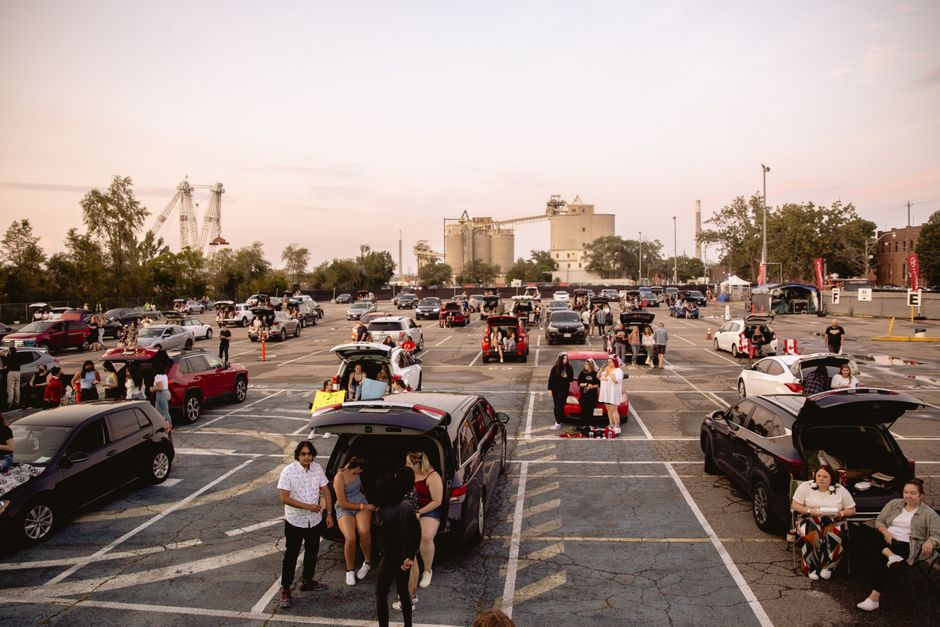 This dream is remarkably common, yet it strikes a nerve every single time. Your car, in the language of dreams, is not just metal and wheels. It is your autonomy, your sense of direction, the vehicle — quite literally — through which you move through life. When you lose it in a sprawling, anonymous parking lot, your subconscious is telling you something worth listening to.
The Dream Weaver invites you to walk through the rows with curiosity rather than panic. What you find may not be the car at all — it may be something you have been searching for in your waking hours without realizing it.## Detailed Dream Scenarios
Table of Contents
- 1. You cannot remember where you parked, and every row looks identical.
- 2. You find your car, but it has been moved to a different spot.
- 3. The parking lot is enormous, multilevel, and you are on the wrong floor.
- 4. Your car is there, but the keys do not work.
- 5. You press the alarm button and hear your car beeping far away, but you cannot reach it.
- 6. Someone else is driving away in your car.
- 7. You return to find the parking lot completely empty — your car and all others are gone.
- 8. You find your car, but it is damaged — dented, scratched, or broken into.
- 9. You are searching in the rain or in darkness.
- 10. You keep finding cars that look like yours but are not.
- 11. A parking attendant or stranger offers to help but leads you in circles.
- 12. You find your car but forget where you were trying to go.
- 13. The parking lot is in a place you do not recognize — a foreign city, a surreal landscape.
- 14. You are late for something important and cannot find the car in time.
1. You cannot remember where you parked, and every row looks identical.
Basic Meaning: This commonly reflects feelings of confusion or being overwhelmed by too many similar choices in your waking life.
Deep Insight: The Dream Weaver sees this as a signal that you have lost your internal compass — not because you lack direction, but because you have been following external markers (expectations, routines, obligations) instead of your own instincts. The uniformity of the rows mirrors a life where days blur together. Reclaim one small ritual that is entirely yours — something that breaks the sameness.
2. You find your car, but it has been moved to a different spot.
Basic Meaning: This often symbolizes a sense that someone or something has altered your plans without your consent.
Deep Insight: On a deeper level, this dream reveals a pattern of passive accommodation. You may be allowing others to rearrange your priorities while telling yourself it does not bother you. The car still exists — your power has not been taken, only displaced. The Dream Weaver's guidance: name the specific area of life where you feel subtly overridden, and reclaim that ground deliberately.
3. The parking lot is enormous, multilevel, and you are on the wrong floor.
Basic Meaning: A large, complex structure suggests feeling lost in a system — work, bureaucracy, or a complicated relationship.
Deep Insight: Each level of the parking garage represents a different layer of your identity — professional, personal, social. Being on the wrong floor means you are operating from a version of yourself that does not match your current needs. The Dream Weaver asks: are you showing up as who you were five years ago instead of who you are now? The elevator between floors is honest self-assessment.
4. Your car is there, but the keys do not work.
Basic Meaning: This typically represents feeling blocked or powerless despite having the resources you need.
Deep Insight: The keys symbolize agency and permission — specifically, the permission you give yourself. The car is right there. The problem is not access; it is activation. The Dream Weaver recognizes this as a pattern of self-sabotage through hesitation. You have what you need. The key that does not turn is the action you keep postponing because the timing never feels perfect.
5. You press the alarm button and hear your car beeping far away, but you cannot reach it.
Basic Meaning: Hearing but not reaching your car suggests you know what you want but feel unable to get there.
Deep Insight: This is a dream of agonizing proximity. The signal is clear — your goal, your identity, your direction is calling out to you. The obstacle is not distance; it is the maze of obligations, doubts, or fears between you and it. The Dream Weaver notes that the alarm itself is a gift: you have not lost your signal. Follow the sound, not the logic of the rows. Sometimes the shortest path is not the most obvious one.

6. Someone else is driving away in your car.
Basic Meaning: This often reflects a fear of identity theft in a metaphorical sense — someone taking credit for your work, or living the life you want.
Deep Insight: The Dream Weaver sees this as projection. The person driving your car often represents a part of yourself you have disowned — the ambitious part, the spontaneous part, the part that takes risks. You are not watching a thief; you are watching your own unlived potential drive away. The task is not to chase them but to ask why you handed over the keys in the first place.
7. You return to find the parking lot completely empty — your car and all others are gone.
Basic Meaning: An empty lot symbolizes a profound sense of abandonment or starting over from nothing.
Deep Insight: This is one of the more powerful versions of this dream. The emptiness is not punishment — it is a blank canvas. The Dream Weaver reads this as your psyche clearing the board. Every car represented a commitment, an identity, a direction. They are all gone now, and that terrifying openness is actually freedom in its rawest form. The question is not where did everything go, but what will you choose to park here next.
More dream scenarios
8. You find your car, but it is damaged — dented, scratched, or broken into.
Basic Meaning: A damaged car reflects feelings that your self-image or confidence has been harmed by recent events.
Deep Insight: The specific damage matters. Dents suggest accumulated small hurts you have not addressed. A break-in suggests a violation of boundaries — someone got into your personal space. The Dream Weaver encourages you to take inventory: the damage in the dream often maps precisely onto the damage you have been minimizing in waking life. Repair starts with honest acknowledgment, not with driving on and pretending the windshield is not cracked.
9. You are searching in the rain or in darkness.
Basic Meaning: Rain and darkness amplify the emotional weight, pointing to sadness, depression, or emotional overwhelm surrounding your search for direction.
Deep Insight: The weather in dreams is always emotional weather. Rain is grief or emotional release; darkness is the unknown. Searching in these conditions means you are trying to find your way forward while processing heavy emotions at the same time. The Dream Weaver's advice is counterintuitive: stop searching. Stand still in the rain. Let the emotion move through you first. The car will be easier to find when the storm passes and you can see clearly.
10. You keep finding cars that look like yours but are not.
Basic Meaning: This mirrors the experience of pursuing paths that seem right but do not fit — wrong jobs, wrong relationships, wrong goals.
Deep Insight: Each almost-right car is a near-miss identity. The Dream Weaver sees this pattern in people who are good at adapting — so good that they lose track of what is genuinely theirs versus what they have learned to tolerate. The subtle wrongness you feel when you try the door and it does not open is your intuition working perfectly. Trust the no. The right car will feel unmistakably yours.
11. A parking attendant or stranger offers to help but leads you in circles.
Basic Meaning: This reflects misplaced trust in guides, mentors, or advice that is not actually serving you.
Deep Insight: The helper in this dream is often your own rational mind — the part of you that makes logical plans that somehow never land. The Dream Weaver notes that going in circles is what happens when you follow someone else's map of a territory only you know. The help you need is not better directions; it is the courage to trust your own memory of where you parked, even if it does not make logical sense.
12. You find your car but forget where you were trying to go.
Basic Meaning: Finding the car but losing the destination suggests recovering your means but losing your purpose.
Deep Insight: This is a subtle and important dream. The car is capability; the destination is meaning. The Dream Weaver recognizes this in high-achieving people who have built impressive vehicles — careers, skills, resources — but have lost connection to why. Sit in the car. Do not start the engine yet. Remember why you learned to drive in the first place.
13. The parking lot is in a place you do not recognize — a foreign city, a surreal landscape.
Basic Meaning: An unfamiliar setting amplifies feelings of disorientation and being out of your element.
Deep Insight: The foreignness of the location tells the Dream Weaver that you are navigating a life transition that has no familiar reference points. New career, new relationship structure, new city, new identity. You cannot find the car because your old navigation system does not work here. This is not failure — it is the natural disorientation of growth. Build new landmarks instead of searching for old ones.
14. You are late for something important and cannot find the car in time.
Basic Meaning: The urgency layer adds time pressure and fear of missing out on opportunities or obligations.
Deep Insight: The deadline in this dream is almost never about the actual event you are late for. It is about your relationship with time and self-worth. The Dream Weaver observes that people who have this version often believe their value is tied to being on time, being reliable, being there for others. The car you cannot find is the permission to put yourself first without guilt. You are not late — you are just finally noticing that you have been running on someone else's schedule.
 ### Psychological PerspectiveFrom a **Jungian perspective**, the car in a dream represents the ego — the conscious self that navigates the external world. Losing it in a parking lot is a powerful image of **ego disorientation**, a moment where the conscious self loses its grip on identity and direction. Jung would note that parking lots are transitional spaces, neither origin nor destination. They are places of pause. Losing your car here suggests that your psyche is in a **liminal state** — between who you were and who you are becoming. The dream is not a warning; it is an invitation to sit in that in-between space rather than frantically searching for the old self.
From a cognitive-behavioral standpoint, this dream often correlates with periods of decision fatigue, overwhelm, or significant life transitions. The repetitive searching mirrors ruminative thought patterns — the mind cycling through options without reaching resolution. The parking lot, with its organized rows and numbered spaces, represents the structures we build to manage complexity. When we cannot find our car within that structure, it reflects a breakdown in our usual coping mechanisms. The dream is essentially your brain running a stress simulation, and the emotional residue it leaves — frustration, helplessness, urgency — is worth examining as a barometer of your current mental load.

Emotional ReflectionLet us sit with this for a moment. The feeling of losing your car in a parking lot — truly sit with it. It is not just frustration. Beneath the surface irritation, there is something more vulnerable: the fear of being stranded, of being the only one who cannot find their way, of everyone else driving off while you stand alone pressing a button that makes no sound.
This is the fear of being left behind by your own life.
And here is what the Dream Weaver wants you to know: that fear is not a prophecy. It is a signal. It means you care deeply about where you are going. It means your internal compass is still working — it is just recalibrating. The panic you feel in the dream is proportional to how much your direction matters to you.
So do not dismiss this dream as random anxiety. Hold it gently. Ask it what it is trying to protect you from. And then — when you are ready — stop searching the rows and start asking yourself a different question: not where is my car, but where do I actually want to drive?
Related Reads
Final Thought
A dream about losing your car in a parking lot is, at its heart, a dream about searching for yourself in a world full of identical options and anonymous spaces. It is your psyche tapping you on the shoulder and whispering: you have been on autopilot, and something in you is ready to steer again.
The car is not gone. It was never gone. It is waiting for you — not in the row where you last parked it, but in the row where you are brave enough to look next. Trust the search. Trust the discomfort. And most of all, trust that the version of you who parked that car knew exactly what they were doing.
Sweet dreams — and may you always find your way back to the driver's seat.


댓글
댓글 쓰기