Dream About Upper vs. Lower Teeth Falling Out: What Each Position Reveals About You
Introduction
Dream about upper versus lower teeth falling out — it is one of the most strikingly specific variations of the universal teeth-loss dream, and it carries a meaning that most generic interpretations completely miss. If you have landed here, chances are your subconscious did not simply knock out a random tooth. It chose a position, and that position matters.
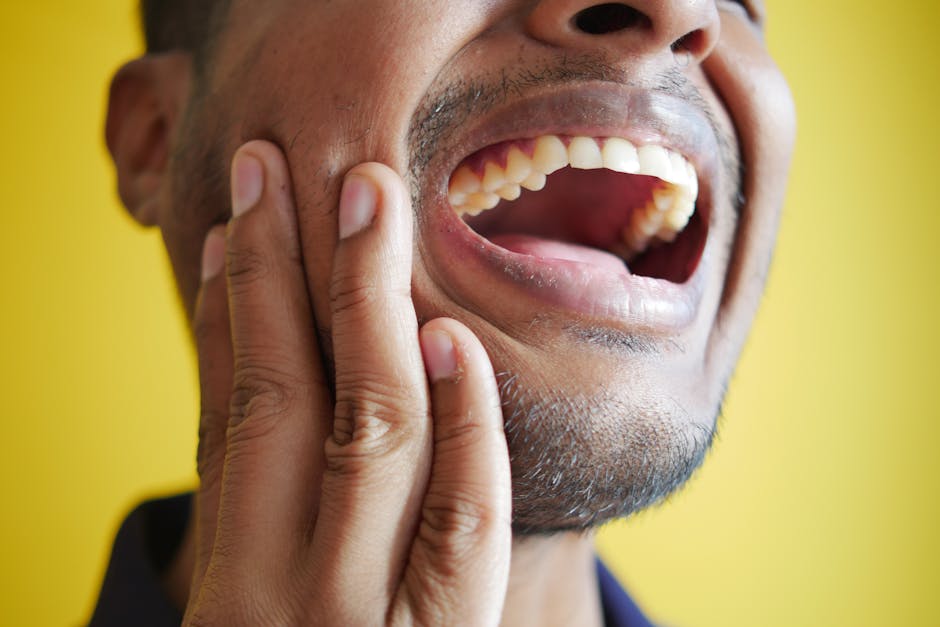 Most dreamers report teeth dreams in broad strokes: they fell out, they crumbled, they were loose. But when the mind distinguishes between upper and lower teeth, it is drawing a line between two fundamentally different psychological territories. Upper teeth, visible when you smile, tend to map onto your public self — confidence, image, how you present to the world. Lower teeth, hidden beneath the lip, often correspond to your private foundations — security, inner stability, the things you rely on but rarely show.
This post will walk you through the difference in detail. We will explore specific scenarios, what Western psychology has to say, and what your emotional response to the dream is quietly telling you. No mystical hand-waving — just honest, grounded interpretation from the Dream Weaver's desk.## Detailed Dream Scenarios
Table of Contents
- 1. Your upper front teeth loosen and fall into your open palm while you are mid-conversation with someone important.
- 2. Your lower teeth drop out one by one during a quiet, solitary moment — perhaps sitting at home alone.
- 3. All of your upper teeth crumble simultaneously into fine powder as you look into a mirror.
- 4. A lower molar breaks apart while you are chewing food at a family dinner.
- 5. Your upper canine teeth grow long and sharp before snapping off cleanly.
- 6. Lower front teeth fall out painlessly and you feel nothing — no blood, no alarm, just quiet absence.
- 7. You are on stage or in a meeting and your upper teeth begin falling out as everyone watches.
- 8. Lower teeth fall out and you swallow them without realizing it until later.
- 9. Someone — a dentist, a stranger, or a parent — forcibly pulls out your upper teeth.
- 10. Your lower teeth become loose and wobbly like a child's baby teeth, then gently fall out.
- 11. Upper teeth fall out and are replaced instantly by new, stronger teeth.
- 12. Both upper and lower teeth fall out simultaneously, leaving your mouth completely empty.
- 13. You pull your own upper teeth out deliberately, one by one, feeling strangely satisfied.
- 14. Lower teeth crack under pressure — as if you were clenching your jaw too hard in the dream.
- 15. Upper teeth fall out and you desperately try to push them back into your gums, but they will not stay.
1. Your upper front teeth loosen and fall into your open palm while you are mid-conversation with someone important.
Basic Meaning: A classic anxiety signal about public image. Upper front teeth are the most visible part of your smile, and losing them mid-conversation points to a fear of being exposed or judged while others are watching.
Deep Insight: The Dream Weaver sees this as a deeper conflict between authenticity and performance. You are not just afraid of looking bad — you are afraid that the version of yourself you have been presenting is starting to crack. The person you are speaking to often represents a specific audience whose approval you have been curating. The fact that the teeth land in your palm, not on the floor, suggests you are still holding on to some awareness of the loss. Ask yourself: where in your life are you performing confidence you do not actually feel? That gap is what the dream is measuring.
2. Your lower teeth drop out one by one during a quiet, solitary moment — perhaps sitting at home alone.
Basic Meaning: Lower teeth falling in private suggests concerns about personal stability — financial security, health, or foundational relationships that others may not see.
Deep Insight: This dream rarely appears when things are visibly falling apart. It tends to surface when the erosion is invisible — a slow financial drain, a relationship losing warmth so gradually that you have not named it yet, or a creeping doubt about a life decision you already committed to. The solitude in the scene is the tell: this is a problem you are carrying alone, perhaps because admitting it would make it real. The Dream Weaver's guidance here is simple — the dream is doing you a favor by making the invisible visible. Name the foundation that feels shaky. You do not have to fix it tonight, but you do need to stop pretending it is solid.
3. All of your upper teeth crumble simultaneously into fine powder as you look into a mirror.
Basic Meaning: A dramatic loss of your social mask. The mirror amplifies self-awareness — you are watching your public identity dissolve in real time.
Deep Insight: Crumbling, as opposed to falling, implies that the structure was already weakened. This is not a sudden shock; it is the moment you finally see what has been degrading for a while. Mirrors in dreams often represent forced self-confrontation. The Dream Weaver reads this combination as: you already know your public persona is unsustainable, and the dream is simply refusing to let you look away any longer. The powder — not whole teeth — suggests the old image cannot be reassembled. The healthier reading? You are being freed from maintaining something that was already hollow.
4. A lower molar breaks apart while you are chewing food at a family dinner.
Basic Meaning: Molars do the heavy work of chewing. Losing a lower one during a meal points to anxiety about your ability to process or sustain something in your domestic or family life.
Deep Insight: Food in dreams often symbolizes emotional or material nourishment, and the family dinner anchors this firmly in your closest relational circle. A lower molar breaking says: the hidden support system you rely on to grind through daily life is fracturing under load. This could be a caretaking role you have outgrown, a family dynamic that demands more than it gives, or the quiet exhaustion of being the reliable one. The Dream Weaver notes that this dream often visits people who never complain — and that is precisely the problem. The molar did not break because it was weak. It broke because it was overworked.
5. Your upper canine teeth grow long and sharp before snapping off cleanly.
Basic Meaning: Canines are associated with assertiveness and aggression. Upper canines growing then breaking suggest a power display that backfired or a confidence that overextended.
Deep Insight: This is a two-phase dream, and both phases matter. The growth phase reveals a desire — perhaps unconscious — to be more dominant, more forceful, more visibly powerful. The snap tells you that this approach has a structural limit. The Dream Weaver interprets this as: you have been testing a more assertive version of yourself, and part of you fears that you cannot sustain the force. This does not mean the assertiveness was wrong — it means the delivery method needs refinement. Confidence built on display alone, like an overgrown canine, is brittle. Confidence rooted in genuine competence does not snap.

6. Lower front teeth fall out painlessly and you feel nothing — no blood, no alarm, just quiet absence.
Basic Meaning: Painless loss often signals emotional numbness or a disconnection from something you should care about losing.
Deep Insight: The absence of pain is the most important detail here. Lower front teeth — your private, foundational stability — are gone, and you feel nothing. The Dream Weaver flags this as a dissociation signal. You may have already emotionally detached from a relationship, a job, a home, or a sense of security that technically still exists in your life but no longer feels like yours. The quiet is not peace; it is the sound of something ending without being mourned. This dream often precedes a major life decision that the dreamer later describes as long overdue.
7. You are on stage or in a meeting and your upper teeth begin falling out as everyone watches.
Basic Meaning: A textbook performance anxiety dream. Losing upper teeth in a public setting magnifies the fear of social humiliation and judgment.
Deep Insight: What sets this apart from a generic stage-fright dream is the specificity of the loss. You are not forgetting your lines or showing up underdressed — you are losing the very tools of articulation. Upper teeth shape your speech. This dream often appears in people who rely heavily on verbal skill: presenters, leaders, salespeople, teachers. The Dream Weaver sees this as a fear not just of embarrassment but of losing your primary instrument of influence. The deeper question is whether your sense of professional worth has become dangerously dependent on a single mode of expression. If the words stopped working, who would you be?
More dream scenarios
8. Lower teeth fall out and you swallow them without realizing it until later.
Basic Meaning: Swallowing teeth symbolizes internalizing a loss — absorbing damage silently rather than expressing it.
Deep Insight: This is the dream of the silent sufferer. Lower teeth are already hidden; swallowing them takes that concealment one step further. You are not just losing foundational stability — you are consuming the evidence, making sure nobody, including yourself, has to confront it. The Dream Weaver reads this as a deeply ingrained habit of self-suppression, likely learned early. The realization coming later in the dream mirrors how these patterns work in waking life: you do not notice the cost until the accumulation becomes impossible to ignore. The guidance is uncomfortable but necessary — what you swallow does not disappear. It sits inside you.
9. Someone — a dentist, a stranger, or a parent — forcibly pulls out your upper teeth.
Basic Meaning: Having teeth pulled by another person suggests a feeling that your public image or confidence is being stripped from you by an external force.
Deep Insight: The identity of the person pulling matters enormously. A dentist suggests an authority figure imposing a necessary but painful correction. A stranger implies an unpredictable, uncontrollable force. A parent points to formative relationships still shaping your self-image. The Dream Weaver notes that in all cases, the dreamer is passive — the teeth are taken, not lost. This points to a felt loss of agency over how you are perceived. You are not choosing vulnerability; it is being inflicted. The critical reflection is: is this passivity accurate, or have you abdicated choices that are actually still yours?
10. Your lower teeth become loose and wobbly like a child's baby teeth, then gently fall out.
Basic Meaning: Baby teeth falling out is a natural part of growth. This dream often signals a transition or maturation in your private, foundational life.
Deep Insight: This is one of the more hopeful teeth-loss dreams. The childlike quality of the teeth suggests that what you are losing is something you have outgrown — an old coping mechanism, a dependency, a version of inner security that belonged to a younger you. The gentleness of the fall is reassuring: this is not violent destruction but natural shedding. The Dream Weaver encourages you to consider this dream as evidence of growth, not damage. The foundation is not collapsing; it is upgrading. The discomfort you feel is the gap between losing the old and trusting the new. That gap is where growth actually lives.
11. Upper teeth fall out and are replaced instantly by new, stronger teeth.
Basic Meaning: Replacement suggests renewal of public identity — the old image dies, but a better one is forming.
Deep Insight: Instant replacement is relatively rare in teeth dreams, and the Dream Weaver treats it as a significant positive signal. Your subconscious is telling you that the image or identity you are afraid of losing is not your final form. The new teeth being stronger says: the next version of your public self will be more resilient than what came before, but only if you allow the old version to fall first. Many dreamers who receive this dream are standing at the edge of a reinvention — a career shift, a new relationship, a changed social role — and the dream is offering reassurance that the fall is not a failure. It is a prerequisite.
12. Both upper and lower teeth fall out simultaneously, leaving your mouth completely empty.
Basic Meaning: Total loss — public image and private stability collapsing at the same time. A profound sense of vulnerability and helplessness.
Deep Insight: This is the most intense version of the teeth dream, and the Dream Weaver does not soften it: this reflects a moment where you feel stripped of both your external defenses and your internal foundations. It often appears during genuine life crises — job loss paired with relationship breakdown, health scares during financial strain, or identity upheaval on multiple fronts. But here is the counterpoint: an empty mouth is also a clean slate. The dream can surface when the old structures genuinely need to go, and half-measures were not working. Total loss forces total rebuilding. The question is not whether you can handle it — it is whether you are willing to build something new without defaulting to the old blueprints.
13. You pull your own upper teeth out deliberately, one by one, feeling strangely satisfied.
Basic Meaning: Self-removal with satisfaction suggests a voluntary dismantling of your public persona. You are choosing to shed an image that no longer fits.
Deep Insight: The deliberateness changes everything. This is not a loss dream — it is a liberation dream. The satisfaction you feel is your subconscious confirming that the mask, the role, the curated version of yourself has become more burden than benefit. The Dream Weaver sees this in people who are ready for authenticity but have not yet taken the external step. They remove the teeth in dreams because they are rehearsing the act of dismantling what is false. The upper position confirms it is the social self being shed. If you wake from this dream feeling oddly peaceful, trust that feeling. It is a signal, not an anomaly.
14. Lower teeth crack under pressure — as if you were clenching your jaw too hard in the dream.
Basic Meaning: Jaw clenching and cracking points to stress and tension you are holding physically and emotionally in your private life.
Deep Insight: This dream often correlates with actual bruxism — teeth grinding during sleep — and the Dream Weaver treats it as a mind-body convergence. Your subconscious is literalizing the pressure you carry. Lower teeth cracking under your own force says: the threat to your foundations is not external. It is the pressure you are putting on yourself. Perfectionism, over-responsibility, relentless self-demand — these are the jaws closing too tight. The crack is not the problem. The clenching is. This dream is an invitation to examine where you are holding tension that serves no one, least of all yourself.
15. Upper teeth fall out and you desperately try to push them back into your gums, but they will not stay.
Basic Meaning: Attempting to restore fallen teeth reflects a refusal to accept change in your public identity or social standing.
Deep Insight: The futility is the message. The Dream Weaver reads this as grief caught in the bargaining stage — you know something has changed in how you are seen or how you see yourself, but you are not ready to accept the permanence. The pushing-back gesture is poignant: it reveals how much energy you are spending on restoration rather than adaptation. This dream frequently appears after social losses that bruise the ego — a demotion, a public mistake, a friendship that ended visibly. The teeth will not stay because the gums have already changed shape. The new shape is not worse. It is just different, and different requires mourning before it allows moving forward.
 ## Psychological PerspectiveFrom a **Freudian standpoint**, teeth dreams are among the oldest documented dream symbols, appearing in Freud's own case studies. Freud linked teeth loss to anxieties around **castration and powerlessness** — a symbolic stripping of potency. When we apply this to the upper-versus-lower distinction, the framework becomes more nuanced. Upper teeth, as instruments of social expression and visible identity, map onto what Freud might call ego presentation — the self you construct for the external world. Losing them in dreams suggests the ego's fear that its carefully maintained facade is failing. Lower teeth, hidden and structural, align more closely with the **id's foundational drives** — security, sustenance, primal stability. Their loss in dreams touches a deeper, more primitive anxiety: not that you will look bad, but that you will not survive.
Carl Jung would approach this dream with different tools but arrive at a complementary destination. For Jung, teeth are symbols of the persona (upper, visible, social) and the shadow (lower, concealed, private). Losing upper teeth is a dismantling of the persona — the mask you wear in collective life. This can be terrifying, but Jung would argue it is also potentially necessary for individuation, the process of becoming a more integrated self. Losing lower teeth, by contrast, suggests a disturbance in the shadow — the parts of yourself you have repressed or refused to acknowledge are demanding attention. The position of the teeth, then, is not accidental. It is your psyche's way of telling you exactly which layer of identity is under pressure, and whether the work ahead is external (rebuilding how you show up) or internal (confronting what you have buried).

Emotional ReflectionBefore you analyze the dream, sit with how it made you feel. Not what it means — how it landed.
Did you wake up panicked, heart racing, hands instinctively moving to your mouth to check? That panic is worth respecting. It tells you that whatever the dream touched — your public image if it was upper teeth, your private stability if it was lower — is something you are genuinely afraid of losing right now. The fear is not irrational. It is information.
Or did you wake up strangely calm, as if something inevitable had finally happened? That calm is equally significant. It often indicates that the loss the dream depicted has, on some level, already occurred in your emotional reality. You have already let go. The dream is just showing you the receipt.
Pay attention, too, to whether you felt shame or relief. Shame points to an attachment to the old structure — you still believe the teeth (the image, the stability) defined your worth. Relief suggests readiness. It says: the thing I was clutching was heavier than I admitted, and my hands feel lighter without it.
Finally, notice who else was in the dream, and how they reacted. Were they horrified? Indifferent? Supportive? Their response often mirrors your own projection of how the world will treat you if the real-life version of this loss becomes visible. Your dream audience is a mirror of your expectations, not a prediction of reality. Most people are far less interested in your teeth — literal or metaphorical — than your anxiety assumes.
Related Reads
Final Thought
The distinction between upper and lower teeth in a dream is not a trivial detail — it is the entire message. Your subconscious chose a position because it is trying to tell you where the pressure lives: in the image you project, or in the ground you stand on.
Neither loss is the end of anything. Upper teeth regrow as new identities. Lower teeth reform as stronger foundations. The dream is not a prophecy of collapse — it is a diagnostic snapshot of where your psychological energy is being spent and where the cracks are forming.
The Dream Weaver's closing counsel is this: do not rush to interpret the dream away. Let it sit with you for a few days. Notice what it makes you pay attention to in your waking life — a relationship, a role, a responsibility, a fear you have been sidestepping. The dream did its job by getting your attention. Now it is your turn to do something with that attention.
Your teeth may have fallen in the dream, but you woke up whole. Start from there.


댓글
댓글 쓰기