Why a Ghost Keeps Following You in Your Dream — 15 Scenarios Decoded by the Dream Weaver
Introduction
A ghost keeps following me in my dream — if that sentence has been circling your mind, you are not alone. It is one of the most emotionally charged dream motifs people report, and it rarely arrives without reason.
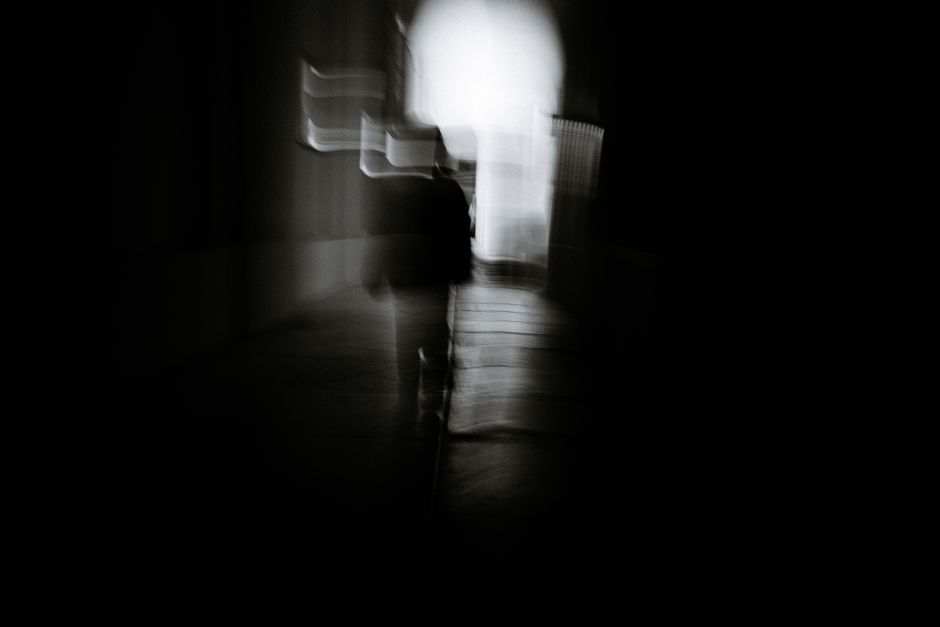 The presence that trails you through the dark corridors of sleep is not random. In dream psychology, a following ghost almost always points to something unresolved — a memory, a relationship, an emotion you have not fully faced. It clings because it needs your attention.
In this post, the Dream Weaver will walk you through 15 distinct scenarios of ghost-following dreams, unpack their psychological roots, and leave you with practical steps to understand what your unconscious is trying to say. No mystical hand-waving. Just honest, grounded insight — delivered with care.## Detailed Dream Scenarios
Table of Contents
- 1. A dark, featureless shadow drifts behind you through an endless hallway. You walk faster; it matches your pace exactly. It never closes the gap, but it never falls behind.
- 2. The ghost has the face of someone you once knew — a deceased grandparent, an old friend, a former partner. They follow you through familiar rooms, reaching out but never quite touching you.
- 3. A ghost with no face follows you silently. It has a human shape but no features — no eyes, no mouth, no expression. The silence is heavier than any scream.
- 4. You are running through your childhood home — the kitchen, the backyard, the bedroom you grew up in — and a ghost is right behind you, drifting through walls you remember being solid.
- 5. The ghost follows you, and you try to run but your legs will not move. You are frozen in place, watching it approach in slow, deliberate steps.
- 6. A ghost follows you and whispers your name. You hear it clearly — your exact name, in a voice that is almost familiar but not quite placeable.
- 7. Not one ghost but many — a crowd of spectral figures surrounding you, all moving in the same direction, all following you no matter where you turn.
- 8. The ghost follows you in broad daylight — not in a dark corridor or haunted house, but in an ordinary street, a park, a grocery store. The normalcy makes it more disturbing.
- 9. The ghost follows you, but it feels protective rather than threatening. It stands between you and something darker. You wake feeling watched but strangely safe.
- 10. The ghost following you has your face. It moves the way you move, breathes when you breathe. It is unmistakably you — but dead, pale, hollow-eyed.
- 11. The ghost follows you into water — a lake, an ocean, a flooded room. It does not stop at the surface. It follows you under.
- 12. The ghost reaches out and touches your shoulder. You feel the cold. You feel the weight of a hand. And then you wake — but the sensation lingers.
- 13. A child ghost follows you — small, barefoot, silent. It looks up at you with enormous eyes but never speaks. You feel guilt you cannot explain.
- 14. You see the ghost in a mirror — it stands behind your reflection, and when you turn around, nothing is there. But in the mirror, it remains.

- 15. The ghost follows you, and with each step it grows larger — filling the hallway, the room, the sky. By the end, it is everywhere and you are inside it.
1. A dark, featureless shadow drifts behind you through an endless hallway. You walk faster; it matches your pace exactly. It never closes the gap, but it never falls behind.
Basic Meaning: This commonly reflects a lingering anxiety or unresolved stress that you sense but cannot identify. The hallway suggests a transitional phase in life — a passage between one state and another.
Deep Insight: The shadow's refusal to close the gap is the critical detail. It does not want to catch you — it wants to be acknowledged. In Jungian terms, this is the Shadow archetype keeping pace with your conscious self, asking for integration rather than confrontation. The Dream Weaver's guidance: stop running inside the dream metaphor. In waking life, ask yourself what low-grade worry you have been outpacing rather than examining. Name it. Writing it down often dissolves the hallway entirely.
2. The ghost has the face of someone you once knew — a deceased grandparent, an old friend, a former partner. They follow you through familiar rooms, reaching out but never quite touching you.
Basic Meaning: Dreams of recognizable ghosts typically reflect unfinished emotional business with that person — unspoken words, guilt, or simply the weight of missing them.
Deep Insight: This dream is less about the person and more about the emotional residue they left in your psyche. The reaching-without-touching gesture signals a boundary your unconscious is drawing: the connection exists, but it lives in memory now, not in the present. The Dream Weaver notes that these dreams often spike around anniversaries or life milestones the person will never witness. The guidance is not to suppress the grief, but to give it a conscious ritual — a letter, a visit to a meaningful place, a conversation spoken aloud to an empty chair.
3. A ghost with no face follows you silently. It has a human shape but no features — no eyes, no mouth, no expression. The silence is heavier than any scream.
Basic Meaning: A faceless ghost often symbolizes an unnamed fear or a threat you cannot define. The lack of identity makes it more unsettling because you cannot categorize or rationalize it.
Deep Insight: The facelessness is the message itself. Your unconscious is telling you that the source of your anxiety has not been identified yet — you feel followed by something, but you do not know what it is. This is common during periods of diffuse stress, where multiple small pressures merge into one shapeless dread. The Dream Weaver's recommendation: sit with the discomfort and list every small concern weighing on you. Often, giving the ghost a face — naming each stressor individually — strips the dream of its power.
4. You are running through your childhood home — the kitchen, the backyard, the bedroom you grew up in — and a ghost is right behind you, drifting through walls you remember being solid.
Basic Meaning: Childhood settings in dreams generally point to foundational experiences. A ghost chasing you through these spaces suggests old wounds or early-life patterns resurfacing.
Deep Insight: The ghost passing through solid walls is a powerful image: the boundaries that once protected you no longer hold against this presence. Psychologically, this often emerges when an adult encounters a situation that reactivates childhood coping patterns — people-pleasing, withdrawal, hypervigilance. The ghost is not the trauma itself; it is the pattern born from trauma, still operating beneath your adult decisions. The Dream Weaver's guidance: identify one recurring reaction in your current life that feels automatic rather than chosen. Trace it backward. That is the ghost's origin.
5. The ghost follows you, and you try to run but your legs will not move. You are frozen in place, watching it approach in slow, deliberate steps.
Basic Meaning: Sleep paralysis imagery or the inability to move in a dream typically represents feelings of helplessness, being trapped in a situation, or lacking agency in waking life.
Deep Insight: The paralysis is not about the ghost — it is about your relationship with power. Somewhere in your waking life, you feel unable to act, speak, or change course. The ghost approaching slowly rather than rushing suggests the threat is not sudden but accumulating — a job you stay in too long, a relationship where your voice has shrunk, a decision you keep postponing. The Dream Weaver observes that these dreams frequently resolve once the dreamer takes even a small, concrete action in the area of life where they feel stuck.

6. A ghost follows you and whispers your name. You hear it clearly — your exact name, in a voice that is almost familiar but not quite placeable.
Basic Meaning: Hearing your name whispered by a ghost suggests a deep need for recognition or a call from your unconscious to pay attention to your authentic self.
Deep Insight: In analytical psychology, hearing your name is one of the most intimate dream events. It means your unconscious is addressing you directly — not through symbol, not through metaphor, but by calling you personally. The almost-familiar voice often belongs to a version of yourself you have abandoned or suppressed: a creative self, an ambitious self, a vulnerable self. The Dream Weaver's guidance: listen to what follows the name. Even if you cannot remember the words, sit quietly after waking and ask yourself what that voice would say if you let it finish.
7. Not one ghost but many — a crowd of spectral figures surrounding you, all moving in the same direction, all following you no matter where you turn.
Basic Meaning: Multiple ghosts amplify the sense of being overwhelmed. This often reflects feeling pressured by the expectations, opinions, or unresolved connections of many people at once.
Deep Insight: The crowd dynamic shifts this dream from personal to social. These ghosts frequently represent the accumulated weight of social obligations, inherited expectations, or ancestral patterns. They follow together because they share a common origin — family narratives, cultural shoulds, the voices of people who shaped your beliefs before you were old enough to choose them. The Dream Weaver recommends a sorting exercise: whose expectations are you carrying that you never consciously agreed to? Not all inherited values are unwanted, but they should be chosen, not defaulted into.
More dream scenarios
8. The ghost follows you in broad daylight — not in a dark corridor or haunted house, but in an ordinary street, a park, a grocery store. The normalcy makes it more disturbing.
Basic Meaning: A ghost in daylight settings suggests that whatever it represents has moved from the unconscious into your everyday awareness. The issue is no longer hidden — it is following you into your waking, functional life.
Deep Insight: This dream signals a threshold crossing: the repressed material has become strong enough to intrude on your conscious, well-lit life. Daylight in dreams represents awareness, routine, and control. A ghost there means your defenses — rationalization, busyness, distraction — are no longer sufficient to keep it contained. The Dream Weaver views this as genuinely positive, despite the discomfort. Material that reaches daylight is material that is ready to be processed. It is knocking on the front door instead of rattling in the basement.
9. The ghost follows you, but it feels protective rather than threatening. It stands between you and something darker. You wake feeling watched but strangely safe.
Basic Meaning: A protective ghost often represents a guardian figure — the memory of someone who cared for you, or an internalized sense of safety that persists even in fear.
Deep Insight: This dream reveals that not all following is pursuit. Sometimes the psyche places a protective presence behind you because you are approaching something difficult and your unconscious knows you need backup. The protective ghost is often a composite: part memory of a real caregiver, part your own internalized resilience that you underestimate. The Dream Weaver's key insight here is that if you feel safe despite being followed, your psyche is telling you that you already have the resources to face what is ahead. Trust the feeling, not just the image.
10. The ghost following you has your face. It moves the way you move, breathes when you breathe. It is unmistakably you — but dead, pale, hollow-eyed.
Basic Meaning: A doppelgänger ghost represents the parts of yourself you have let die — abandoned ambitions, suppressed traits, or an identity you outgrew and discarded.
Deep Insight: This is one of the most psychologically significant ghost dreams. The dead version of yourself following the living version is a direct confrontation with self-abandonment. Jung called this encounter with the Shadow a necessary crisis: you cannot integrate what you refuse to face. The hollow eyes are not accusation — they are emptiness, asking to be filled again. The Dream Weaver asks: what did you used to be that you stopped being? Was the death of that self a conscious choice, or did it happen through neglect? The distinction matters. What was consciously released can be mourned and honored. What was neglected needs to be reclaimed or properly buried.
11. The ghost follows you into water — a lake, an ocean, a flooded room. It does not stop at the surface. It follows you under.
Basic Meaning: Water in dreams represents the emotional unconscious. A ghost following you into water suggests that the unresolved issue has penetrated your deepest emotional layers.
Deep Insight: Water is the unconscious itself in dream symbolism, and a ghost willing to follow you there means this material is not surface-level. It has roots in your emotional core — in attachment patterns, in grief that was never fully metabolized, in love that was never fully expressed. The flooded room variant is particularly telling: a room is a structured, contained space, and flooding means the emotions have exceeded the container. The Dream Weaver's guidance: this dream calls for more than journaling. It may benefit from therapeutic support — not because something is wrong with you, but because depth work is safer with a guide.

12. The ghost reaches out and touches your shoulder. You feel the cold. You feel the weight of a hand. And then you wake — but the sensation lingers.
Basic Meaning: Physical sensation in dreams, especially cold touch, often means the emotional content is breaking through the dream barrier and affecting your body. It suggests the issue demands immediate, somatic attention.
Deep Insight: When a dream produces a sensation that persists after waking, the body is speaking. This is not symbolic — it is psychosomatic signaling. The shoulder is where we carry burdens, where we receive taps that say pay attention. The cold is the emotional temperature of the unresolved material: it has been frozen, stored, put on ice. The Dream Weaver's insight: your body remembers what your mind has archived. If the cold lingers, try placing a warm hand on the spot where you felt the touch and breathing slowly. The warmth is your conscious self answering the ghost's question.
13. A child ghost follows you — small, barefoot, silent. It looks up at you with enormous eyes but never speaks. You feel guilt you cannot explain.
Basic Meaning: A child ghost typically symbolizes your inner child — the younger version of yourself that experienced something painful and was never fully comforted or heard.
Deep Insight: The guilt is the key emotion here. It arises because the adult self knows, on some level, that the child self was abandoned internally. You grew up, built defenses, moved forward — and left that vulnerable part behind without resolution. The barefoot detail suggests exposure and unprotection. The silence suggests the child learned that speaking did not help. The Dream Weaver's guidance: inner child work is not sentimental indulgence. It is the process of going back to the moment where a part of you stopped developing emotionally and offering it what it needed then — safety, words, presence. A therapist trained in parts work or IFS can guide this powerfully.
14. You see the ghost in a mirror — it stands behind your reflection, and when you turn around, nothing is there. But in the mirror, it remains.
Basic Meaning: Mirror ghosts represent aspects of yourself visible only in reflection — traits, fears, or truths you can see when you look inward but that vanish when you try to confront them directly.
Deep Insight: The mirror is the instrument of self-examination, and the ghost that exists only in reflection is the insight that comes only through introspection, not through external action. You cannot turn around and grab it; you can only see it by looking at yourself. This dream often appears when someone is on the edge of a personal revelation but keeps deflecting into activity instead of sitting with the reflection. The Dream Weaver notes: the ghost does not vanish from the mirror. It is patient. It will be there every time you look. The question is whether you will look long enough to understand what it is showing you.
15. The ghost follows you, and with each step it grows larger — filling the hallway, the room, the sky. By the end, it is everywhere and you are inside it.
Basic Meaning: A growing ghost represents an issue that expands the longer it is ignored. What started small has become all-consuming through avoidance.
Deep Insight: This is the dream of procrastinated reckoning. The ghost was manageable once — a whisper, a flicker, a small discomfort. But each day of avoidance fed it. Now it fills your entire field of vision. Being inside the ghost at the end is not destruction; it is total immersion in the avoided material. Paradoxically, this is where resolution begins — when you can no longer separate yourself from the issue, you are finally positioned to process it from within rather than fleeing from without. The Dream Weaver's closing note: the ghost did not grow because it was powerful. It grew because you waited.

From a Jungian standpoint, the ghost that follows you in a dream is one of the clearest manifestations of the Shadow — the rejected, repressed, or unlived aspects of the psyche that do not disappear simply because you refuse to look at them. Jung argued that what we do not bring to consciousness appears in our lives as fate, and in our dreams, it appears as pursuers. The ghost is not evil. It is exiled. It follows because it belongs to you and has nowhere else to go. The act of following is not aggression; it is a homecoming attempt. The ghost wants to return to the whole from which it was split.
From a Freudian lens, the repetition of the following motif connects to the repetition compulsion — the psyche's tendency to re-stage unresolved experiences until they are mastered. The ghost returns not to haunt but to re-present material that was inadequately processed the first time: a loss that was never mourned, a boundary that was never set, a truth that was never spoken. Object relations theory adds another layer — the ghost may represent an internalized relationship pattern, a way of relating to others (or to yourself) that was formed early and now operates automatically, below awareness. In each case, the prescription is the same: not exorcism, but integration. The ghost does not need to be destroyed. It needs to be understood, named, and given a place in your conscious story.### Emotional Reflection
Let us be honest about what it feels like to be followed in a dream.
It is not just fear. It is the particular, skin-crawling awareness that something knows where you are — that no matter how far you go, how fast you move, how many doors you close, it is still there. That awareness does not end when you wake up. It sits in your chest. It colors your morning. It makes you glance over your shoulder in a well-lit room.But here is what the Dream Weaver wants you to consider: that feeling — the one that will not leave — is not your enemy. It is your signal. It is the emotional equivalent of pain in the body: not the problem itself, but the alarm telling you where the problem lives. The ghost follows because something in you is asking to be seen, held, and finally put to rest.
The bravest thing you can do after a ghost dream is not to shake it off and get on with your day. It is to sit with the feeling for five minutes. To ask it what it needs. To write down the first answer that comes, without editing or judging.
You may be surprised. The ghost rarely wants what you fear it wants. It usually wants something much simpler: to be heard.
Related Reads
A Final Thought from the Dream Weaver
The ghost that follows you in your dream is not a curse. It is a courier.
It carries a message from the part of you that lives below language, below logic, below the bright surface of your managed, functional life. That message has been patient. It has waited through busy days and distracted nights. It has followed you because it trusts that eventually, you will turn around.
And when you do — when you stop running and face the presence behind you — you will likely find that it is smaller than it seemed. Quieter. More familiar.
Because the ghost was never a stranger.
It was always you.
If these dreams persist, consider speaking with a therapist who works with dream material. Not because the dreams are dangerous, but because they are valuable — and a skilled guide can help you hear what the ghost has been trying to say.


댓글
댓글 쓰기