Mountain Dream Meaning: What Climbing, Summits, and Peaks Reveal About You
Introduction
A Dream about mountains stays with you long after you wake up. You remember the scale of it, the thin air, the way the ground tilted under your feet, and you wonder what it wanted from you.
 Mountains are one of the oldest symbols in the human imagination. They are where prophets went to listen, where kings built their strongholds, where the weather is made. In dream language, a mountain is rarely just scenery. It is usually the shape of something you are facing: a goal, a burden, a version of yourself you have not become yet.
So the mountain dream meaning depends on one question above all others. What were you doing with the mountain? Climbing it, avoiding it, standing on top of it, watching it fall apart?
A climbing mountain dream and a dream of a mountain seen from a distance are two different conversations. In this guide, The Dream Weaver walks you through the most common mountain scenarios, then steps back to look at the psychology underneath, so you can read your own dream instead of someone else's.## Detailed Dream Scenarios
Table of Contents
- 1. Climbing a steep mountain and making slow, steady progress.
- 2. Standing on the summit, looking out over everything below.
- 3. Trying to climb, but slipping backward or losing your footing.
- 4. Looking up at a mountain from the bottom, feeling too small to try.
- 5. Reaching what you thought was the top, only to find a higher peak beyond it.
- 6. Being caught in an avalanche or watching the mountain collapse.
- 7. Climbing a mountain in the dark or in thick fog.
- 8. Climbing alongside someone, or being helped up by another person.
- 9. Descending the mountain after reaching the top.
- 10. A mountain rising from a calm lake, perfectly reflected in the water.
- 11. A volcano or a mountain that is on fire.
- 12. Flying over mountains or seeing a mountain range from above.
- 13. Living in a house or cabin on the side of a mountain.
1. Climbing a steep mountain and making slow, steady progress.
Basic Meaning: You are working toward a long-term goal, and the dream is confirming that the effort is real and the direction is right.
Deep Insight: Notice the pace. Slow progress in a climbing mountain dream is not a warning; it is your mind rehearsing endurance. Waking life rewards sprints, but the psyche respects the climb. If you woke up tired, the dream is asking you to protect your energy: fewer commitments, more rest between pushes. If you woke up energized, you are closer to the ridge than you think.
2. Standing on the summit, looking out over everything below.
Basic Meaning: A classic sign of achievement, perspective, and the feeling of having earned your view.
Deep Insight: Summits in dreams are quiet places. There is usually no crowd, no applause, just wind and distance. That silence matters. The dream is showing you what success actually feels like from the inside: spacious, a little lonely, clear. Ask yourself whether you are chasing the summit or the cheering. If it is the cheering, the dream is gently redirecting you toward your own perspective as the real prize.
3. Trying to climb, but slipping backward or losing your footing.
Basic Meaning: Frustration with obstacles, self-doubt, or a sense that your effort is not translating into results.
Deep Insight: Slipping dreams often arrive when you have been forcing something. The mountain is not rejecting you; the route is wrong. In Jungian terms, the ego keeps pushing the same path while the unconscious keeps sending the same feedback. Try changing the approach rather than the intensity. Ask for help, split the task, or step sideways. Mountains are climbed in switchbacks, not straight lines.
4. Looking up at a mountain from the bottom, feeling too small to try.
Basic Meaning: A goal or responsibility feels overwhelming, and you have not yet taken the first step.
Deep Insight: This is the most honest mountain dream there is. Nothing has gone wrong yet; you are just standing at the trailhead. The dream is not measuring your ability. It is measuring the gap between how big the task looks and how much of it you can actually see. From the base, you can only ever see the first stretch. That is enough. The Dream Weaver's rule: the first step is the whole plan, because the second step reveals itself only after the first.
5. Reaching what you thought was the top, only to find a higher peak beyond it.
Basic Meaning: Goals shifting, moving targets, or the sense that finishing one thing only reveals the next.
Deep Insight: Climbers call this a false summit, and the psyche uses it deliberately. It shows up in people who define themselves by arrival. The dream is teaching a different rhythm: reach, rest, look, go again. There is no final peak in a living life, and that is not a punishment. If this dream felt crushing, your relationship with achievement may need renegotiating. If it felt exciting, you are built for the long range.

6. Being caught in an avalanche or watching the mountain collapse.
Basic Meaning: Sudden loss of control, a structure in your life giving way, or emotions that have built up and finally released.
Deep Insight: Snow accumulates quietly before it moves. So does stress. Avalanche dreams tend to arrive after weeks of holding things together for other people. The collapse is not the danger; the silence before it was. Treat this dream as an early alarm rather than a prophecy. Name the pressure out loud to one trusted person this week. The mountain that collapses in a dream is often the rigid version of yourself that needed to come down anyway.
7. Climbing a mountain in the dark or in thick fog.
Basic Meaning: Moving forward through uncertainty, decisions made without full information, or a loss of clarity about your direction.
Deep Insight: The remarkable thing about fog dreams is that the dreamer keeps climbing anyway. Give yourself credit for that. Fog in the psyche is not the same as being lost; it means you are between clear stages, and the old map has stopped working. Instead of demanding a full view, feel for the slope under your feet. Which way is up? Follow that. Clarity in a mountain dream usually returns after a decision, not before it.
More dream scenarios
8. Climbing alongside someone, or being helped up by another person.
Basic Meaning: The importance of support, partnership, or a relationship that shares the weight of your ambitions.
Deep Insight: Pay attention to who it was. A known face points to a real alliance you may be underusing. A stranger often represents a part of you that is more capable than your daily self admits, what Jung might call an unrecognized resource. Either way, the dream is dismantling the myth of the solo climber. You do not lose credit for the summit by accepting a rope. You lose the summit by refusing one.
9. Descending the mountain after reaching the top.
Basic Meaning: The integration phase: returning to ordinary life after a period of intense effort or transformation.
Deep Insight: Most mountain accidents happen on the way down, and the psyche knows it. Descent dreams appear after a promotion, a graduation, a breakup you initiated, any peak you actually reached. The question is not what you achieved but what you carry back. Give yourself a structured comedown: a week of lighter expectations, a conversation about what changed. The descent is where the climb becomes wisdom instead of just a story.
10. A mountain rising from a calm lake, perfectly reflected in the water.
Basic Meaning: Balance between ambition and emotion, or a rare moment of inner stillness.
Deep Insight: This is one of the few mountain dreams that asks nothing of you. The mountain is the conscious goal; the water is the emotional depth beneath it. When they mirror each other, you are aligned: what you want and how you feel agree. Dreams like this are worth remembering on hard days, because they show that the alignment exists and can be returned to. Write it down. Describe the colors. Your mind is giving you a reference point.
11. A volcano or a mountain that is on fire.
Basic Meaning: Suppressed anger, passion, or creative pressure that is close to erupting.
Deep Insight: A burning mountain is a goal with heat behind it. Sometimes that heat is rage you have politely postponed; sometimes it is a creative project you keep shelving. Either way, the pressure is real and the lid is thin. The dream is not telling you to explode. It is telling you to open a vent, a hard conversation, a page of writing, a workout that leaves you shaking. Controlled release keeps the mountain standing. Denial is what makes the eruption inevitable.
12. Flying over mountains or seeing a mountain range from above.
Basic Meaning: A big-picture view of your life, freedom from a struggle, or the ability to see how challenges connect.
Deep Insight: Flying dreams over mountains tend to appear when you have recently solved something that once felt impossible. The mountains are still there, but they no longer own you. Use this dream strategically. From above, which peaks were connected? Often the problems you treated as separate share one ridge, one root cause. Sketch the range when you wake up. That map is your strategy for the next year, drawn by the part of you that already sees it whole.
13. Living in a house or cabin on the side of a mountain.
Basic Meaning: A desire for solitude, stability, or a life built on your own terms at a slight remove from the crowd.
Deep Insight: This dream belongs to people who are tired of the valley: the noise, the comparison, the constant reachability. It is not a fantasy of escape. It is a request for altitude, for a daily life that sits a little above the chatter. You do not need to move to the mountains. You need a room, an hour, a practice that functions as one. Build the cabin in your schedule and the groundedness follows.
 ## Psychological Perspective: The Mountain in the Western Mind
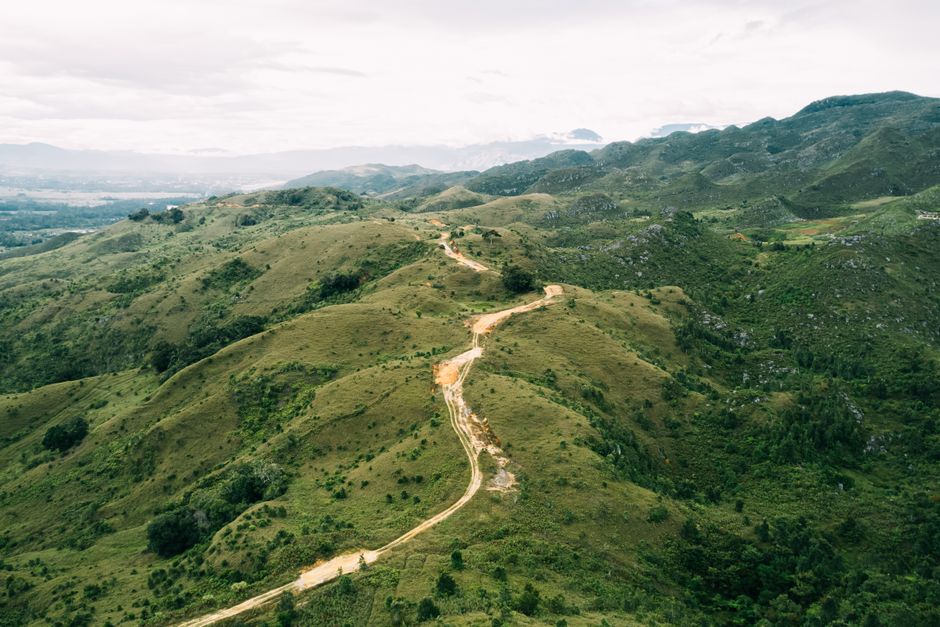
In Jungian psychology, the mountain belongs to the family of symbols that point toward the Self: the whole personality, conscious and unconscious together. A summit is the center that is also the highest point. Climbing is what Jung called individuation, the lifelong work of becoming who you actually are rather than who you were trained to be. That is why a climbing mountain dream so often arrives during a career shift, a spiritual crisis, or the middle of a long project. The psyche is narrating the process back to you.Freud read mountains differently, as monuments of ambition and, at times, of the father, the towering figure the child measures himself against. There is truth in both readings. Modern cognitive research adds a third layer: the brain uses spatial metaphors to organize effort, and "uphill" is the default image for difficulty across nearly every culture studied. When you dream of a mountain, the mind is compressing weeks of effort, fear, and hope into a single landscape you can finally look at. The mountain dream meaning, in the end, is less about the mountain and more about your posture toward it. Are you the climber, the watcher, the one who fell, or the one who built a home halfway up?
Emotional Reflection
Strip the symbols away for a moment and ask the simpler question. How did the mountain make you feel?
Awe is different from dread. Determination is different from exhaustion. Two people can have the same climbing mountain dream and wake up in opposite emotional states, and the feeling, not the image, is what the dream was really about.If the dominant feeling was fear, the mountain is a demand you have not yet accepted. If it was longing, the mountain is a life you keep postponing. If it was peace, you are already on the right slope and simply needed to see it.
What You Can Do
- Write the dream down in the first ten minutes after waking, feelings first, images second.
- Name the real-life mountain in one sentence. If you can't, that ambiguity is the actual message.
- Break the next stage into a single first step you could take before the end of the week.
- Identify one person who could hold the rope, and tell them you are climbing.
- Schedule a rest. Every mountain dream, without exception, is also a dream about pacing.
- If the dream recurs, track it. Recurring mountains are the psyche keeping a promise to itself.
Related Reads
Concluding Thought
Mountains do not care whether you climb them. That is the strange comfort in these dreams. The mountain will still be there tomorrow, unchanged, patient, indifferent to your doubt.
What changes is you. Every mountain dream meaning in this guide comes back to the same quiet fact: the mountain is the shape of your effort, seen from the outside for once. The climb, the slip, the fog, the summit, the long walk down. None of them are verdicts. They are weather reports from the part of you that is already on the trail.
So when you next dream of a mountain, don't ask whether it was a good sign or a bad one. Ask what you were doing, and whether you would do it again in the morning.
Keep Reading
- Dream about falling: why the drop matters more than the landing
- Dream about being lost: the psychology of losing your way
- Dream about water and lakes: reading the emotional layer beneath your goals


댓글
댓글 쓰기