City Dream Meaning: 14 Powerful Messages Hidden in a Dream of a Bustling City
Introduction
Few dream settings feel as alive — or as overwhelming — as a Dream about a city. You wake with traffic still humming in your ears, unsure whether you were lost, late, or finally free. That is why the city dream meaning is almost never about buildings.
A city is the mind's map of other people. Streets are the choices available to you. Towers are the roles you perform. Crowds are the expectations you carry on your back without noticing the weight.
So when you dream of a bustling city, your sleeping mind is usually taking inventory. How much of this life is mine? How much of it is simply traffic I agreed to sit in?
 Below, we walk fourteen specific city scenes, one at a time. You don't need all of them. You need the one that matches last night.

Detailed Dream Scenarios
Table of Contents
- 1. Walking through a bustling downtown at rush hour, shoulder to shoulder with strangers
- 2. Lost in an unfamiliar city, every street leading somewhere you don't recognize
- 3. A vast city that is completely empty — no cars, no voices, only wind
- 4. A city glowing at night with neon signs, music spilling from doorways
- 5. Flying above the city, or looking down on the skyline from a great height
- 6. Returning to the city of your childhood, but the streets have shifted
- 7. A city under heavy construction — scaffolding, cranes, half-finished towers everywhere
- 8. The city flooding, burning, or collapsing while you watch from the street
- 9. Running through a station and missing the train or bus by seconds
- 10. Impossible architecture — stairs that double back, hallways that loop, streets that repeat
- 11. A familiar city where the buildings have moved and nothing is where it should be
- 12. Searching for your home or hotel room and being unable to find the door
- 13. Seeing a shining city in the distance but never managing to reach it
- 14. Moving into a brand-new city and unpacking in a bright, unfamiliar apartment
1. Walking through a bustling downtown at rush hour, shoulder to shoulder with strangers
Basic Meaning: Traditionally read as a sign of social pressure, busyness, and a life moving faster than you chose.
Deep Insight: Notice who is setting the pace. In this dream the crowd is rarely hostile — it is simply indifferent, and indifference is what makes us walk faster than we need to. The Dream Weaver reads this as a borrowed tempo: you have matched your stride to people who are not going where you are going. For the next week, deliberately do one daily task at half your usual speed and watch what anxiety rises. That anxiety is the real message.
2. Lost in an unfamiliar city, every street leading somewhere you don't recognize
Basic Meaning: Commonly linked to confusion about direction in life, a career crossroads, or a decision you keep postponing.
Deep Insight: Being lost in a dream city is not a failure of navigation — it is a failure of destination. The mind can only build a map toward a place you have actually named. Most people in this dream have goals that are inherited rather than chosen, and the streets refuse to cooperate with a goal that isn't truly yours. Write down the one thing you are heading toward, in a single sentence, with no one else's approval in it.
3. A vast city that is completely empty — no cars, no voices, only wind
Basic Meaning: Usually interpreted as loneliness, isolation, or the fear of being left behind by everyone you know.
Deep Insight: There is a gentler reading. An empty city is the whole machinery of expectation with the audience removed, and many dreamers report feeling unexpectedly calm inside it. That calm is diagnostic: it tells you the exhaustion you carry is social, not physical. You are not tired of your life. You are tired of being watched inside it. Protect two hours a week where you are genuinely unobserved.
4. A city glowing at night with neon signs, music spilling from doorways
Basic Meaning: Often tied to desire, temptation, excitement, and an appetite for experience you've been denying yourself.
Deep Insight: Neon in dreams is light that advertises. Jung would call these the glitter of the persona — everything bright and curated and designed to be chosen. The question is not whether you should want it. It's whether the wanting is yours or installed. Pick one of the glowing things from the dream and ask what it would cost you daily, not just on the first night.
5. Flying above the city, or looking down on the skyline from a great height
Basic Meaning: A classic symbol of perspective, achievement, and rising above a situation that once overwhelmed you.
Deep Insight: The altitude matters less than the relief. Dreamers who fly over cities are usually people who have been living inside a single street-level problem for months, and the psyche is offering a demonstration: the problem is one block in a city of thousands. Hold on to the feeling of scale. Then go back down, because wisdom earned at altitude only pays off on the ground.
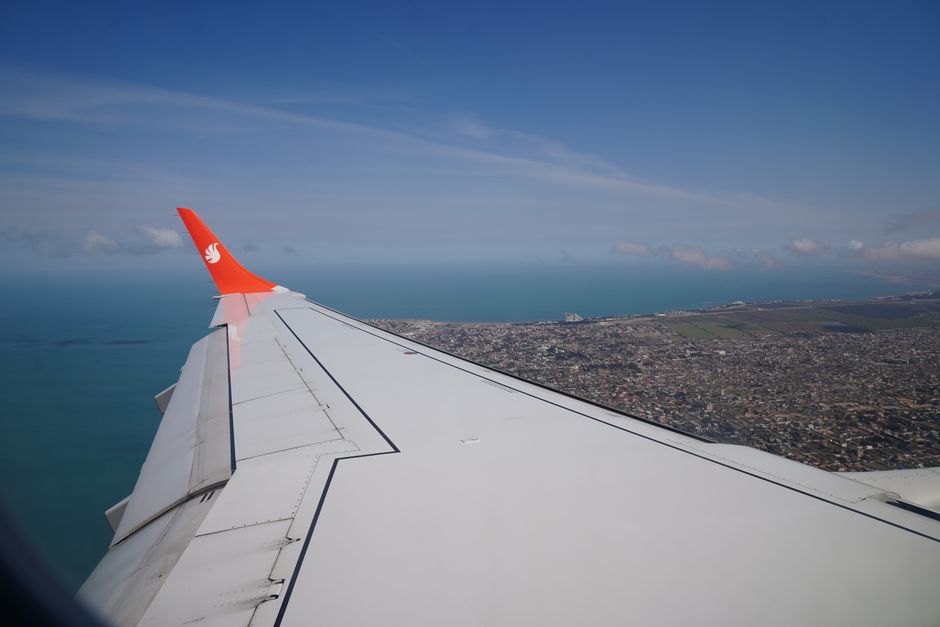
6. Returning to the city of your childhood, but the streets have shifted
Basic Meaning: Read as nostalgia, unresolved family history, or grief for a version of yourself you've outgrown.
Deep Insight: The rearranged streets are the honest part of this dream. Memory is not storage — it is reconstruction, and the mind is admitting it has been quietly editing your origin story to match who you are now. This is not dishonesty. It's growth. Call someone who was there and compare one specific memory; the gap between your versions is where your identity has been doing its work.
7. A city under heavy construction — scaffolding, cranes, half-finished towers everywhere
Basic Meaning: Typically a sign of personal transition, a life being rebuilt, or plans that are underway but not yet livable.
Deep Insight: Construction dreams arrive most often in the messy middle, not at the start or the end. Something in you is genuinely being built, and the discomfort you feel is structural, not emotional — you are living on a site, not in a home. Stop judging your current state by the standards of a finished building. Ask instead whether the scaffolding is still holding something up or just left over from last year's project.
More dream scenarios
8. The city flooding, burning, or collapsing while you watch from the street
Basic Meaning: Often feared as a warning of disaster, but usually tied to overwhelm and the collapse of a structure you depended on.
Deep Insight: Cities in dreams are systems — jobs, families, routines, reputations. When one comes down in a dream, the psyche is rehearsing survival rather than predicting ruin, and rehearsal is a kindness. Note what you tried to save first. That instinct, captured in a panicking moment, is the clearest ranking of your actual values you will ever get.
9. Running through a station and missing the train or bus by seconds
Basic Meaning: The familiar dream of lost opportunity, deadlines, and the fear that life is leaving without you.
Deep Insight: Look closer: in most versions, there is another train. The dream rarely strands you — it strands your schedule. This points to a belief that opportunity is singular and timed, which is the mathematics of scarcity rather than of real life. Identify the 'last train' you think you missed at twenty-five or thirty-five, and name one person who boarded a later one and arrived anyway.
10. Impossible architecture — stairs that double back, hallways that loop, streets that repeat
Basic Meaning: Associated with frustration, circular thinking, and problems that resist every solution you try.
Deep Insight: Looping cities are the dream language of rumination. The architecture isn't broken; it's faithfully modelling a thought you've been walking in circles for weeks. The exit is never found by walking harder. Write the looping thought down as a single question, and then write whether that question is answerable at all. Most of them aren't — and naming them unanswerable is the door.
11. A familiar city where the buildings have moved and nothing is where it should be
Basic Meaning: Linked to instability, loss of control, or the sense that your environment changed without consulting you.
Deep Insight: This dream tends to follow a change you consented to but never fully processed — a move, a promotion, a new household. The streets are mimicking a map lag: you have the right city, the wrong internal layout. Give yourself an explicit adjustment period with a date on it. Naming a transition as ongoing is what stops it from feeling like malfunction.
12. Searching for your home or hotel room and being unable to find the door
Basic Meaning: Read as insecurity about belonging, or a lack of a safe private space in your waking life.
Deep Insight: The missing door is almost always about privacy, not property. People who have this dream are usually generous with their time to the point of having no room with a lock on it — physical or emotional. The remedy is unglamorous and effective: establish one small territory that is not available to anyone. A chair, an hour, a notebook. Dreams respect borders you actually enforce.
13. Seeing a shining city in the distance but never managing to reach it
Basic Meaning: The symbol of an unreachable goal, an ideal held just out of grasp, or a hope you're afraid to test.
Deep Insight: Distance in dreams is often protective. As long as the city stays on the horizon, it can remain perfect, and you can remain someone who was never disappointed by it. Jung's work on projection applies directly here: we place our unlived life somewhere far away to keep it safe from reality. Take one concrete, unromantic step toward it this month — enough to see a real street.
14. Moving into a brand-new city and unpacking in a bright, unfamiliar apartment
Basic Meaning: Generally a positive sign of new beginnings, fresh identity, and readiness for change.
Deep Insight: Watch what you unpacked. The objects your dream chose to bring are your non-negotiables — the parts of yourself you intend to carry into every future version of your life. Everything you left in boxes is worth a second look too, because the unopened box is where old obligations quietly travel. Make an honest list of what you are bringing forward, and what you have been hauling around unexamined.
 ### The Psychological Perspective
Western dream psychology has long treated the built environment as a portrait of the self. For Freud, a city was a layered structure — a place where old districts persist under new facades, much like repressed material persists beneath a composed adult personality. He was fond of comparing the mind to Rome: nothing is truly demolished, it is only built over. On that reading, a city dream is an excavation, and the neighbourhood you wander into says something about the era of yourself you are currently standing on.
Carl Jung took it somewhere broader. For him the city belonged to the family of collective symbols — the mandala, the walled garden, the ordered center — and it represented the attempt to organize an inner life into something inhabitable and shared. A city in a dream therefore sits precisely at the seam between the personal and the social: it is where the Self negotiates with the persona, where private need meets public expectation. This is why crowds in dreams feel so loaded. A crowd is not a threat; it is an audience, and the audience in your dream was assembled entirely by you.Modern clinical work adds a quieter note. Contemporary researchers see dream settings less as coded messages and more as the brain's emotional simulation space — a safe arena to rehearse navigation, risk, and belonging. Both views can coexist. The city is a stage for rehearsal, and the script it hands you tends to be the one you most need to practise.

Emotional Reflection
Most people wake from a city dream with one of three feelings: overwhelmed, lonely, or quietly exhilarated. It is worth sitting with the feeling before interpreting the content, because the emotion is older and more reliable than the imagery. The streets are the mind's set design. The feeling is the actual report.
If you woke overwhelmed, the dream is likely commenting on volume — too many inputs, too many people with legitimate claims on your attention. If you woke lonely in a crowd, the comment is about quality of contact, not quantity, and that distinction matters enormously. And if you woke exhilarated, take it seriously as information: some part of you wants more life, more motion, more city, and has been politely waiting to be asked.#### Practical Steps
-
Record the weather and the hour. Write down whether your dream city was day or night, crowded or empty, before you record anything else. These two details shift the meaning more than any landmark.
-
Name the street you were on. If it maps to a real place, note what period of your life that place belongs to. Dreams reuse geography to timestamp emotions.
-
Track the crowd. For one week, log which real-life situations make you feel like one of many. The pattern usually points straight at the source of the dream.
-
Reclaim a door. Establish one small, defended space — a time, a room, a notebook — that no one else can enter. Repeated 'lost home' dreams respond fast to this.
-
Take one real step toward the distant skyline. Something unglamorous and verifiable: an email, a price, a date. Replace one fantasy detail with one fact.
-
Slow one task deliberately each day. Then note the discomfort. That discomfort is the borrowed tempo making itself visible.
Related Reads
Concluding Thought
A city dream is not a warning about the world. It is a floor plan of your current life, drawn at night by the only architect who knows where everything actually goes.
The crowd was yours. The unlit street was yours. The glowing tower on the horizon, the train you missed by seconds, the apartment you were unpacking into — all of it assembled from the material you have been living in. That is the reassuring part of the city dream meaning: nothing in it came from outside you, which means nothing in it is beyond your influence.
You do not need to redesign the whole city. Pick one street. Walk it at your own pace, in daylight, and see where it goes.
Related Reading
- Dream meaning of being lost: what your mind is really asking when you can't find the way
- Dream meaning of crowds and strangers: how the sleeping mind stages other people
- Dream meaning of houses and rooms: reading the architecture of the self
Sleep well. The city will still be there tomorrow — and so will you, with a slightly better map.


댓글
댓글 쓰기