Horse Dream Meaning: 14 Powerful Messages Your Mind Is Sending You
Introduction
Dream about a horse — few images arrive with such force, such muscle, such unmistakable presence. If you woke up with hooves still thundering somewhere behind your ribs, you already know that a horse dream meaning is rarely about horses at all.
 The horse is one of the oldest companions in the human imagination. Long before it appeared in our dreams, it carried us across distances we could not cross alone. That history lives in us. So when a horse walks into your sleeping mind, it tends to carry a very specific kind of cargo: your own vital energy — the part of you that wants to move, to run, to be let out of the stall.
Western psychology has a useful word for this. Carl Jung called it libido, meaning not sexuality narrowly but life-force broadly: drive, instinct, appetite, momentum. The horse, in his reading, is one of the clearest pictures the unconscious ever paints of that force. It is powerful. It is not entirely tame. And crucially, it is not you — it is something you ride, something you must learn to work with.
That relationship is the real story of your dream. Were you in the saddle or on the ground? Was the horse calm or frantic? Did you hold the reins, or did the reins hold you?
Below, we'll walk through fourteen distinct scenarios, each with a conventional reading, a deeper psychological layer, and a question worth sitting with. Take what resonates. Leave what doesn't. Your dream is yours.## Detailed Dream Scenarios
Table of Contents
- 1. Riding a horse at a smooth, confident gallop across open ground
- 2. A wild horse that refuses to be caught, breaking away every time you get close
- 3. Falling off a horse mid-ride
- 4. A pure white horse standing still, looking directly at you
- 5. A black horse emerging from darkness or shadow
- 6. A horse in a stable or stall, healthy but confined
- 7. A horse galloping toward you at speed
- 8. An injured or limping horse
- 9. Riding a horse that suddenly changes direction against your will
- 10. A horse that speaks to you
- 11. Being kicked or bitten by a horse
- 12. A horse giving birth, or a foal standing for the first time
- 13. Watching a herd of horses move together
- 14. A horse crossing water, or swimming with you on its back
1. Riding a horse at a smooth, confident gallop across open ground
Basic Meaning: The classic reading is straightforward and encouraging: you are in command of your own momentum. Riding a horse in dream at full gallop, with the wind behind you and the ground steady beneath, traditionally signals progress, ambition finding its outlet, and a period where your effort and your direction finally agree with each other.
Deep Insight: Look closer at the word partnership. You are not running — the horse is. Your job in that dream is balance, not propulsion. This is the unconscious showing you a working alliance between your conscious will and your instinctual drive, which is a genuinely rare and valuable state. Jung would call this the ego riding the libido rather than fighting it. Practically: notice what in your waking life currently feels effortless in this same way. That is not luck. That is alignment, and it is worth protecting. Guard the conditions that produced it — the sleep, the boundaries, the people who don't drain you — because this kind of flow is maintained, not summoned.
2. A wild horse that refuses to be caught, breaking away every time you get close
Basic Meaning: Conventionally, the uncatchable horse points to untamed energy in your life — a desire, a talent, or an impulse that you have not yet found a way to channel. Something in you is running loose.
Deep Insight: Here is the part most readings skip: the horse is not the problem. Your technique is. A wild horse flees from the approach of someone it reads as a threat, and in dream logic, you are often approaching your own instincts exactly that way — with a rope, a plan, and a grim determination to get this under control. The unconscious tends to answer force with flight. What gets a wild thing closer is patience and consistent, unalarming presence. Translate that: the appetite you keep trying to suppress or schedule into submission may respond better to curiosity. Ask what it wants before you ask it to stop.
3. Falling off a horse mid-ride
Basic Meaning: The common interpretation is loss of control — a project, relationship, or plan that has thrown you. Falling dreams in general speak to fear of failure and the sudden removal of support you had assumed was permanent.
Deep Insight: But notice what preceded the fall. Almost always, in these dreams, the rider was gripping too hard or sitting too stiffly. Riders know this: rigidity is what unseats you, not speed. The deeper message is often not you are losing control but you were holding on wrong. Over-control is itself a form of instability. If something recently threw you, ask honestly whether you were trying to micromanage a process that needed your flexibility instead of your grip. The fall is not a verdict on your competence. It is feedback on your posture.
4. A pure white horse standing still, looking directly at you
Basic Meaning: White horses carry centuries of positive association: purity, good news, spiritual clarity, arrival. Traditionally, this dream is read as a benevolent omen — guidance drawing near, or a clean new beginning.
Deep Insight: What makes this dream remarkable is the stillness. A white horse that stands and looks at you is not offering a ride; it is offering a meeting. In Jungian terms this edges toward an encounter with a guiding archetype — a figure from the deeper psyche that arrives not to carry you anywhere but to be acknowledged. These images tend to surface at genuine thresholds: before a decision you've been circling, after a loss you haven't finished processing. The appropriate response in the dream and out of it is the same: don't rush it. Stand there. Let the moment be as significant as it feels. Write it down before the day erodes it.
5. A black horse emerging from darkness or shadow
Basic Meaning: The black horse is often read with unease — associated with mystery, the unknown, sometimes with dread or bad news. Many dreamers wake from it unsettled without quite knowing why.
Deep Insight: Jung's concept of the shadow is the key that fits this lock. The shadow is not evil; it is simply everything about yourself you've declined to claim — your anger, your ambition, your neediness, your refusal. A black horse is often that disowned vitality showing up in a form you can't ignore. And here is the genuinely good news hidden in a frightening image: shadow energy is still your energy. It is power you have been paying to keep locked up. Dreamers who learn to approach the black horse rather than flee it frequently report feeling more whole, not more dangerous. Start small. Name one thing you want that you've told yourself you shouldn't.
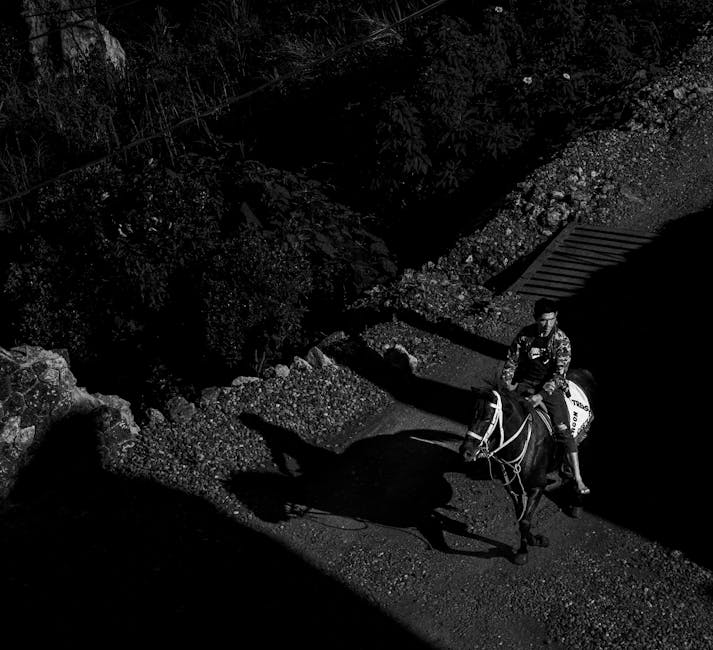
6. A horse in a stable or stall, healthy but confined
Basic Meaning: Confinement imagery almost always maps to a waking sense of restriction. The healthy-but-penned horse typically signals potential on hold — capability you possess but currently cannot exercise.
Deep Insight: The crucial detail is whether the stall door is locked. In a surprising number of these dreams, it isn't — and the dreamer never checks. That's the message. Many constraints we experience as external are maintained, at least partly, by a habit of not testing them. This is learned helplessness in equine form. Before you accept that you're stuck, do the unglamorous audit: which of your current limits have you actually tried to move in the last six months, and which have you simply inherited and stopped questioning? Often one of those doors swings open with a push.
7. A horse galloping toward you at speed
Basic Meaning: An approaching horse at speed is usually read as something significant arriving fast — news, change, or an unavoidable confrontation with a force larger than yourself.
Deep Insight: The interpretive key is your body in the dream. Did you brace, flee, or open your arms? The unconscious frequently uses this scenario as a rehearsal, testing how you meet incoming force. If you froze, that's not cowardice — it's information about a situation in waking life where you've gone still instead of choosing. Freezing feels like safety but functions as a decision. Identify what is currently bearing down on you, then make an actual choice about it: step aside deliberately or stand your ground deliberately. Either beats being found standing there by accident.
More dream scenarios
8. An injured or limping horse
Basic Meaning: An injured horse commonly reflects depleted vitality — your energy, health, or enthusiasm running below capacity. Many dreamers see this image during burnout or recovery.
Deep Insight: Pay attention to how you treated the horse. Dreamers who find themselves urging an injured animal to keep going are usually doing exactly that to themselves while awake. The horse is a remarkably honest mirror of how you handle your own limits. If you pushed it, you likely have a belief that rest must be earned — and that belief is costing you more than the rest would. The instinctual psyche does not respond to discipline when it's hurt. It responds to care. Recovery is not a pause in the work; it is part of the work. What would you do for an injured animal in your care? Do a version of that for yourself this week.
9. Riding a horse that suddenly changes direction against your will
Basic Meaning: This points to a plan going sideways — momentum continuing but heading somewhere you didn't choose. It's often read as a warning about misplaced trust or an unreliable situation.
Deep Insight: Consider a less flattering, more useful possibility: the horse may know something you don't. Instinct sometimes swerves because it has registered a hazard the conscious mind filtered out as inconvenient. Before you label the swerve a betrayal, check whether part of you has been quietly resisting the original direction for a while — a dread on Sunday evenings, a reluctance you keep overriding. The body often registers a wrong turn months before the mind admits it. That change of direction may be the most honest thing in the dream.
10. A horse that speaks to you
Basic Meaning: A talking animal is traditionally read as a message from a deeper source — guidance from beyond ordinary reasoning. Folk interpretation treats such dreams as significant and worth remembering.
Deep Insight: Psychologically, the speaking horse is your instinct granted language. This is notable because instinct normally communicates in sensation: tension, appetite, unease. When the psyche gives it words, it usually means something has been ignored at the sensory level for long enough that the unconscious escalated to a form you can't misread. So the content matters enormously, even if it sounded strange on waking. Write down whatever fragment you remember, without editing it into something sensible. Dreamers often find that the odd sentence lands with uncomfortable precision a week later.
11. Being kicked or bitten by a horse
Basic Meaning: Animal aggression in dreams generally signals a boundary violated — a sense of being punished, betrayed, or lashed out at by something you expected to be safe.
Deep Insight: Horses rarely strike without warning; they pin ears, shift weight, flick a tail. The warnings simply go unread. In dream terms, this scenario often follows a long stretch of ignoring smaller signals from your own nature — the fatigue you worked through, the resentment you reframed as patience. The kick is the escalation, not the beginning. The practical work is less about this dramatic moment and more about retraining your attention to notice the ear-pin level of signal: the small irritation, the early no. Instincts that get heard early rarely need to shout.
12. A horse giving birth, or a foal standing for the first time
Basic Meaning: New life imagery is among the most hopeful in the dream vocabulary: a beginning, a creative project taking its first steps, a fresh capacity emerging in you.
Deep Insight: The detail worth noticing is the foal's legs — famously unsteady, comically long, nothing like the power they'll become. This is the unconscious offering you a realistic picture of early-stage strength, and it's a mercy. New things in us arrive wobbling. If you've recently started something and feel embarrassed by how shaky it looks, this dream is reframing that wobble as appropriate rather than disqualifying. Protect the new thing from premature judgment, including your own. Nobody evaluates a foal's gait on day one.
13. Watching a herd of horses move together
Basic Meaning: The herd typically speaks to collective energy — your social world, family system, workplace, or community, and your place within it.
Deep Insight: Your position in the dream is the whole interpretation. Inside the herd and moving with it suggests belonging, though it's worth asking whether that belonging currently costs you your own direction. Watching from outside can mean exclusion — but it can equally mean individuation, the Jungian process of becoming distinctly yourself, which almost always involves a season of standing apart and feeling the ache of it. Separateness and loneliness look identical from inside and mean entirely different things. Which one you're in is usually revealed by whether the distance feels like exile or like room.
14. A horse crossing water, or swimming with you on its back
Basic Meaning: Water represents emotion in nearly every dream tradition, so a horse crossing it suggests navigating feeling — moving through an emotional passage with strength beneath you.
Deep Insight: This is one of the most encouraging combinations the psyche produces. Water is the realm where the conscious mind is weakest; instinct, by contrast, swims. The image suggests your emotional passage is survivable precisely because you are not relying on reasoning alone to get across. Note how deep the water was and whether the horse's head stayed above it. Either way, the instruction tends to be identical and counterintuitive: stop steering and let it swim. Emotional crossings are rarely completed through analysis. They're completed by continuing to move while feeling.
 ### Psychological AnalysisWestern depth psychology has treated the horse with unusual seriousness, and for good reason. Freud, working from his own framework, tended to read the horse as an image of **powerful instinctual drive** — the raw motive force that the civilized ego must somehow harness without being trampled. His famous case of 'Little Hans,' a boy with a horse phobia, hinged on exactly this: the animal as a carrier for feelings too large and too forbidden to be held consciously. Whatever one makes of the specifics, the structural insight holds up remarkably well. Horses in dreams tend to appear precisely where there is more energy present than the dreamer's conscious self has learned to manage.
Jung took the symbol considerably further and, for most dreamers, more usefully. He understood the horse as a depiction of the non-human psyche within us — the instinctual, animal intelligence that predates our reasoning and operates by entirely different rules. In his framework the horse is not an enemy of consciousness to be subdued, and not a master to be obeyed, but a partner in an ongoing negotiation. The rider needs the horse's power; the horse needs the rider's direction. Neither functions well alone. This is why the quality of the relationship in your dream matters so much more than the horse itself. A dream of mastery, a dream of being thrown, a dream of a horse you cannot catch — these are three reports on the same relationship at three different stages of health.
There is one more layer worth knowing. Jung observed that the horse frequently appears at transitional moments — not during the stable stretches of life, but at thresholds: a career shift, the end of a relationship, the beginning of grief, the approach of a decision that will foreclose other lives. The horse is, after all, the animal of travel. When it enters your dreams, it is often announcing that movement is underway whether or not you have consciously agreed to it. The question the dream poses is not will I move but will I be in the saddle for it.
Sitting With the Feeling
Before interpretation, there was sensation. Try to return to it.
What did the dream feel like in your body? Horse dreams tend to produce unusually physical residue — a tightness in the thighs, a lift in the chest, a held breath, a sense of speed that lingers past waking. That bodily memory is often more diagnostic than any symbol dictionary, including this one.
If the dream felt exhilarating, something in you is ready for more range than it currently has. That readiness is worth taking seriously rather than filing under 'nice dream.' Energy that finds no outlet does not politely dissipate; it tends to convert into restlessness, irritability, or a low hum of dissatisfaction you can't trace to a cause.
If it felt frightening, be gentle with the interpretation. Fear of a horse in a dream is rarely fear of harm. More often it's the specific vertigo of encountering your own capacity — the recognition that you contain more force than your current life has room for, and that letting it move would change things. That's a legitimate thing to be afraid of. Change is a real loss, even when it's the right one.
And if it felt sad — a thin horse, a lost one, one you couldn't reach — something may be grieving a version of your life that had more motion in it. That grief deserves acknowledgment before it gets problem-solved.
Here are some practical ways to work with what the dream raised:
- Write it down within ten minutes of waking. Dream memory decays fast, and the details you'll lose first — the horse's color, the ground's texture, where your hands were — are usually the interpretively richest ones.
- Note your position before anything else. Rider, bystander, or pursued? Record that single fact, because it defines the entire relationship the dream is reporting on.
- Name one place in waking life where you currently feel 'reined in.' Then ask the uncomfortable follow-up: who is holding those reins? Sometimes the honest answer is you.
- Move your body the day after a horse dream. Walk, run, stretch, lift something heavy. These dreams are about instinctual energy, and instinctual energy responds to physical expression far more readily than to analysis.
- Identify one small limit you can test this week. Not a dramatic break — a single door you've assumed was locked. Push it and see.
- If the dream recurs, track what precedes it. Recurring horse dreams often cluster around specific waking triggers: a particular meeting, a conversation avoided, a Sunday night. The pattern is the message.
Related Reads
Final Thoughts
The horse has carried human beings for roughly six thousand years, and somewhere in that long collaboration we learned something we've never quite been able to say directly — so we dream it instead.
What the horse knows is this: power you cannot control is not useless, and power you fully control is no longer power. Every rider lives inside that paradox. The entire art is partnership — attention over force, responsiveness over grip, a relationship rather than a conquest.
Your horse dream meaning is, in the end, a status report on that relationship. Not a prophecy, not a verdict. Just an honest picture of how you and your own vitality are currently getting along, delivered by the part of your mind that has no reason to flatter you.
So take the picture seriously, and take it lightly. Notice whether you were riding or watching, holding on or letting go, chasing or being chased. Then ask the only question that really follows from any of it:
Where does this energy actually want to go — and are you willing to go with it?
You might also explore: What Water Dreams Reveal About Your Emotional State, Dreams About Flying: Freedom, Escape, and the Fear of Falling, and Animal Dreams and the Jungian Shadow: Meeting the Instinctual Self.
Sleep well. And if the horse comes back, say hello.


댓글
댓글 쓰기